Modern Finnish design
Modern Finnish design
Welcome to the third and final part of our deep dive into the post-war design of the major Nordic design nations: Denmark, Finland and Sweden. In this article, we will focus on Finnish Modernism.
Finnish design stands firmly on two legs: Traditional crafts and industrial production. This may seem like a paradox, but it has produced a distinctive design language as particular and unique as the Finnish language itself.
Torn between the neighbouring superpowers Sweden and Russia, Finland finally gained its independence in 1917. Forging a new national identity, Finns found their inspiration in folk art and the national epic Kalevala, a compilation of ancient Finnish and Karelian oral poetry published in the mid-19th century.
Just as in Sweden, abundant natural resources formed the basis for industrial production. Arabia and Iittala, both founded in the late 19th century, took part in international fairs with ceramics and glass that fused Arts & Crafts and National Romantic influences with local traditions.
The idea of a Gesamtkunstwerk, fusing art, design and architecture, was particularly strong in Finland in the early 20th century – as evidenced in the work of architect and designer Eliel Saarinen. Saarinen, who moved to the United States to work and teach, had a strong influence on later generations, including his own son Eero Saarinen and Alvar Aalto.
After finishing his studies at the Helsinki University of Technology, Aalto quickly became a central figure within Finnish architecture and design. With the founding of the company Artek, Alvar and his then-wife Aino Aalto together with Maire Gullichsen and Nils-Gustav Hahl created a strong brand that championed Finnish design all over the world.
As the name implies, Artek sought to marry art and technology, creating furniture that would be at the forefront both aesthetically and from a production standpoint. Thanks to Aalto’s experiments, bent and laminated birch became a defining material of post-war Finnish furniture.
At the same time, Aalto designed architectural landmarks such as the Paimio Sanatorium and Villa Mairea. Many of his iconic furniture pieces were in fact designed for these buildings, such as the Paimio Chair.
While the shadow of Aalto and Artek has loomed heavy over Finnish design to this very day, there have been examples of radical designers who have dared stand up to the master and experiment with modern materials such as plastic and fibreglass.
Here are three designers who, in different ways, have defined, expanded and questioned the DNA of Finnish design:

The Icon: Eero Aarnio
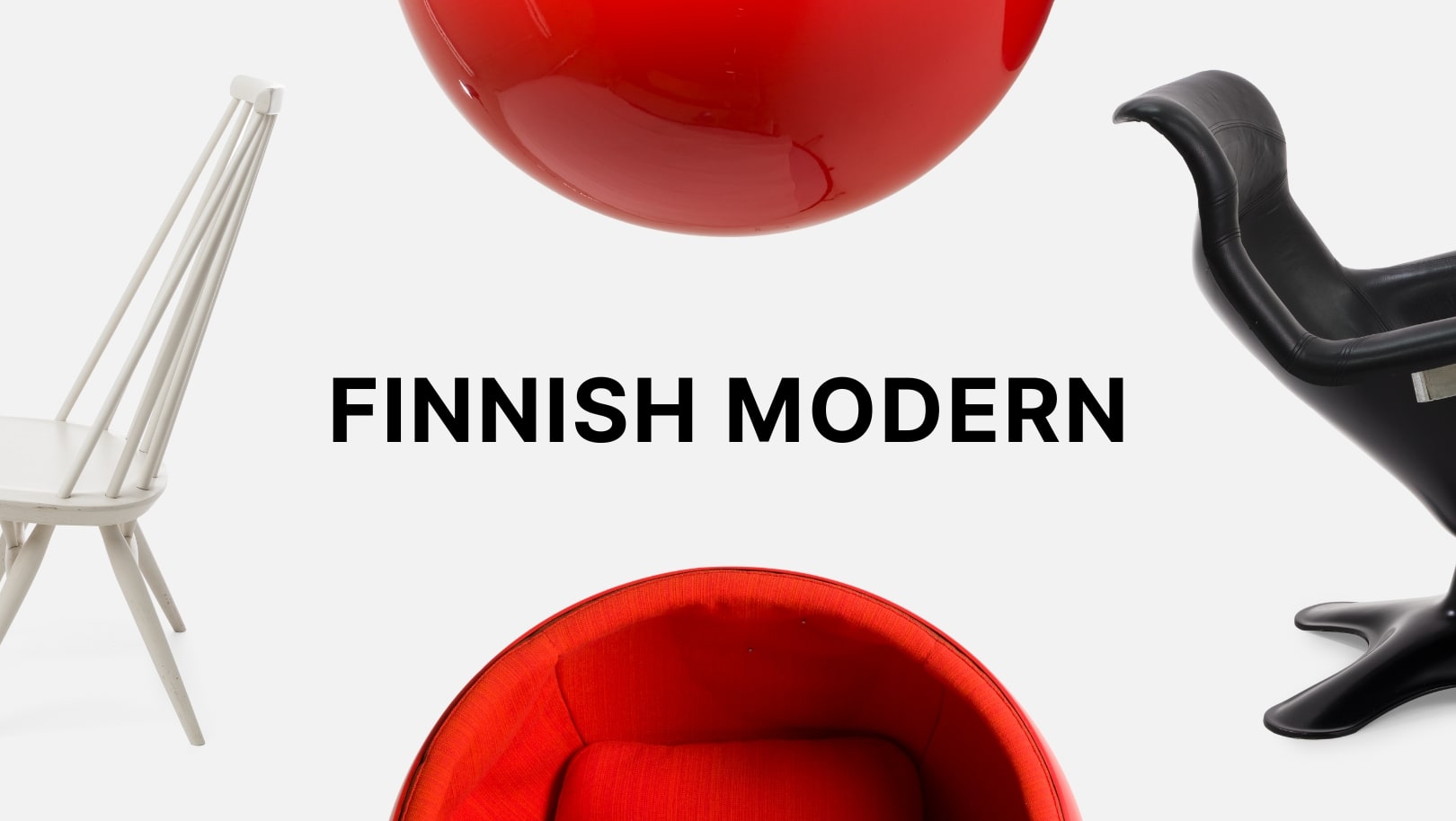
In many ways, Eero Aarnio was Alvar Aalto’s opposite. While Aalto pioneered bent-wood furniture, Aarnio created sculptural fibreglass chairs in bright colours. But they did have a few things in common, such as organic shapes and ergonomics. With his famous Ball Chair, Aarnio created a fibreglass sphere lined with upholstery that embraces the sitter. The Ball Chair is an immediately recognisable pop icon, immortalised in movies, fashion shoots and record covers.

The insider’s favourite: Ilmari Tapiovaara
As a designer, Ilmari Tapiovaara created furniture for everyday use. Rather than work for a wealthy elite, he designed durable, affordable furniture for homes, schools and public spaces. He was a master of rational construction, who worked in common woods like pine and birch. Nevertheless, his furniture always had a poetic, elegant air around it. Just look at his Mademoiselle chair, which translated the classical Windsor chair into a modern, Nordic design language.

The iconoclast: Yrjö Kukkapuro
Yrjö Kukkapuro was a singular voice in the Finnish design world. During his long career, he went through several different styles and worked in a wide range of materials – from bent-wood to fibreglass, metal, leather and bamboo. Working on the prototype for his Karuselli chair for years, Kukkapuro was convinced that somebody else would come up with a similar design and release it before him, thus rendering all his hard work useless. But Karuselli became an international hit, appearing in design journals all over the world. In the 1980s, the stylistically restless designer created a Finnish counterpart to the Italian design group Memphis with his eclectic, postmodern furniture in plastic, fibreglass and painted wood.