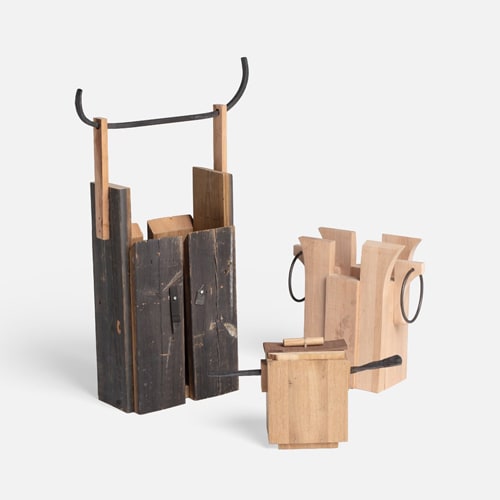
Wendy Skogstad is a designer educated in Spatial Design at Konstfack whose practice is rooted in craftsmanship, material exploration, and making by hand. Working across objects, furniture, and spatial compositions, she is particularly interested in how materials carry stories, memories, and traces of human labor.
At the core of Wendy’s work is a fascination with the handmade and the value we place on objects when their creation process is visible. She believes people connect more deeply with things that reveal the hands behind them, making craftsmanship not only a method but also a way of creating meaning and attachment.
Her recent project explores these ideas through a collection of vessels created entirely from salvaged materials sourced from Konstfack’s workshops. By reusing surplus materials left behind by other students, each object carries traces of previous makers and histories, becoming a physical archive of past use and transformation. In recognition of the project’s potential, Wendy was awarded a Konstfack scholarship to continue its development.
Growing up between Lebanese, Greek, and Danish cultural traditions has strongly influenced her perspective and design language. These diverse cultural references, together with an appreciation for Japanese approaches to craftsmanship, material respect, and sustainability, inform her work. Ecological responsibility is also central to her practice. She prioritizes reclaimed materials, minimizes waste, and embraces resource-conscious methods that highlight the value and beauty of what already exists.
Wood is her preferred material, appreciated for its warmth, texture, scent, and visual richness, while a growing interest in forged steel has expanded her material vocabulary. Form often serves as the starting point for her projects, with inspiration emerging through material exploration, prototyping, and model making. Her process is highly intuitive and hands-on, allowing shapes, textures, and material qualities to guide the development of ideas.
For Wendy, craftsmanship is fundamental. She views it as a reflection of culture, history, and human ingenuity—a way of understanding how we shape the world around us. Through thoughtful making and material storytelling, her work celebrates the value of care, resourcefulness, and human connection.