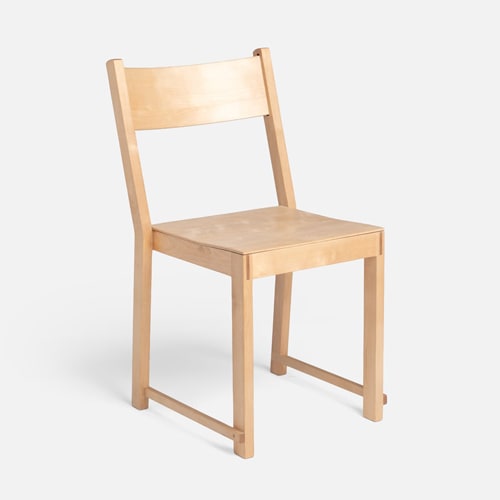
Valentin Strohkirch is a designer studying the Master's programme in Spatial Design at Konstfack. His practice is rooted in a strong interest in making, material knowledge, and the relationship between design and production. Working across furniture, interiors, and spatial interventions, he seeks to bridge the gap between design speculation and the realities of fabrication, creating work that is grounded in everyday use and material understanding.
A recurring theme in Valentin’s work is a curiosity about how things are made. He is interested in the assemblies, details, and material processes that shape the built environment, often focusing on seemingly simple objects and situations to uncover their complexity. Rather than designing for images or display, he develops projects that emerge through close engagement with materials, tools, and production methods.
Alongside his current studies, Valentin developed a project investigating the kitchen as a spatial typology. Through the design and construction of a full-scale kitchen, he explored the materials, fixtures, and components that define one of the most familiar spaces in everyday life. The result was presented as a short film at the Lund Architecture Film Festival and marked the beginning of an ongoing exploration of material-based design in dialogue with industry and manufacturing.
Materials are central to Valentin’s practice and often serve as the starting point for his projects. Whether working with locally sourced timber, steel, or other construction materials, he allows their properties, limitations, and histories to guide the design process. He has worked closely with a local sawmill in Stockholm that salvages urban trees, valuing materials that carry visible traces of origin, use, and character.
His process typically begins with an observation—a detail noticed in the city, a construction method, or an overlooked everyday object. Through writing, sketching, making, and continuous refinement, ideas evolve through physical experimentation rather than predetermined solutions. Learning manufacturing techniques and understanding tools are essential aspects of his approach, allowing form and concept to emerge together.
For Valentin, functionality and aesthetics are inseparable. He sees creativity not as an alternative to practical concerns but as a necessary part of creating objects that function well, endure over time, and can be reproduced through careful craftsmanship. His work reflects a commitment to thoughtful making, material honesty, and a deeper understanding of how design becomes part of everyday life.