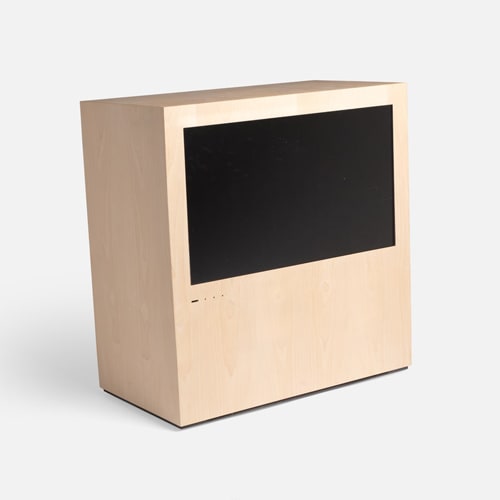
Oskar Schmidt is a Swedish designer with a Master's degree in Spatial Design from Konstfack, following both his Bachelor's (2020-2023) and Master's (2024-2026) studies within the Interior Architecture and Furniture Design programme. Between his degrees, he worked with product design at Office for Design (O f D) in Stockholm, gaining professional experience that further strengthened his interest in long-lasting and thoughtful design.
Schmidt's practice is guided by the idea of visual sustainability. Rather than creating objects that demand attention, he seeks to design furniture and interiors that remain relevant and appreciated over time, both in terms of quality and appearance. He believes that design should enrich everyday life without becoming its focal point. In his view, the designed object should act as a canvas, allowing the user to become the active participant rather than the spectator.
Central to his work is a critique of contemporary design culture, particularly the increasing influence of social media on the discipline. Schmidt challenges the notion that design should be optimized primarily for visual impact on a screen. Instead, he advocates for a design approach rooted in longevity, usability, and restraint, creating objects that quietly support daily life while remaining present in the periphery.
Woodworking forms the foundation of his practice and has been a continuous thread throughout his education. Working with wood allows him to move between bespoke craftsmanship and industrial production, exploring how carefully designed objects can maintainquality and integrity across different scales of manufacture. His understanding of production methods and manufacturing principles plays a crucial role in his design process, enabling him to navigate and challenge conventional constraints while remaining grounded in practical realities.
Schmidt is particularly interested in the relationship between design, production, and sustainability. Rather than creating singular statement pieces that blur the boundaries between art and design, he focuses on developing useful, enduring objects intended for everyday use. He believes that a more sustainable future depends on creating products that resist short-lived trends and remain valuable over time. Through a combination of material knowledge, thoughtful production methods, and an emphasis on visual longevity, his work seeks to promote a more responsible and lasting design culture.