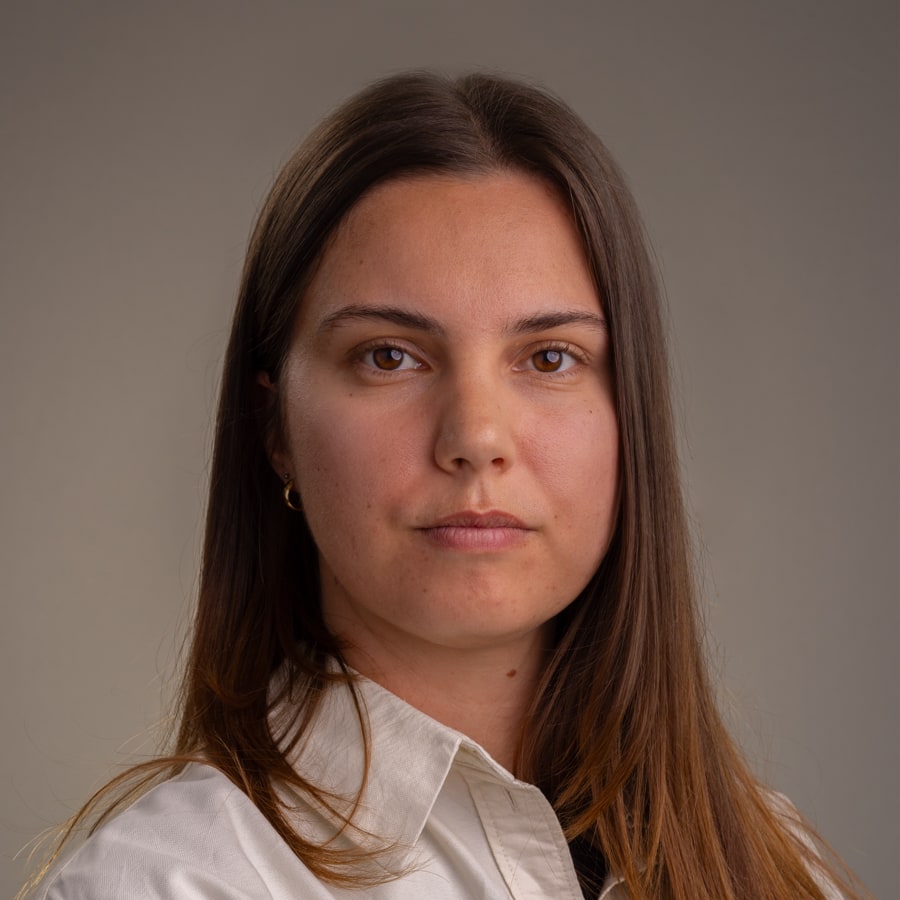
Linn Krouthén is a furniture designer educated at Malmstens whose practice combines furniture design, object design, and illustration. Through a process grounded in research, drawing, model making, and prototyping, she explores the relationship between form, material, and craftsmanship, creating objects that exist between utility and sculpture.
A recurring starting point in Linn’s work is the history of objects. She is interested in understanding how forms and functions have evolved over time and uses this knowledge as a foundation for developing contemporary designs. Material exploration is equally important, with materials serving not only as a means of construction but also as carriers of character, meaning, and narrative.
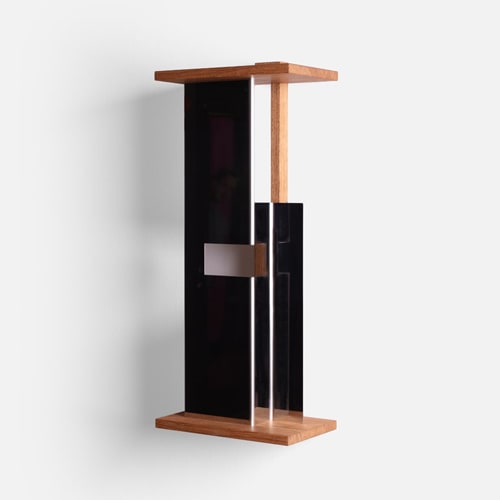
Her degree project, Triptyk, explores the relationship between mirrors and perception through a series of three mirrors made from stainless steel and oak. The project asks what happens when a mirror no longer provides an immediate reflection. Through carefully considered angles, surfaces, and forms, reflection becomes something that must be actively sought rather than instantly received. By reintroducing curiosity into the encounter with an everyday object, Triptyk encourages a more conscious and interactive experience of reflection and space.
During her studies at Malmstens, Linn also developed Stålverk, a pair of mirrors exhibited during Stockholm Design Week 2026. Both projects reflect her growing interest in steel as a material and its potential within contemporary furniture and object design. In 2026, she was awarded the Jubelfondens utbildningsstipendium in recognition of her work.
Linn is particularly interested in the contrast between steel and wood. While steel offers precision, strength, and clarity, wood introduces warmth, texture, and individuality. She often works by allowing materials to inform decisions about construction, proportion, and detail, while also exploring how their qualities can be challenged and expanded through design.
Her design process moves fluidly between research, sketching, model making, material testing, and prototyping. Influenced by her background in illustration, she has developed a strong visual language and often begins with drawing before translating ideas into physical models. Through making, forms are refined, tested, and gradually resolved.
Functionality is an important part of her practice, but it is never the sole objective. Linn seeks to create objects that function well while also offering character, surprise, and emotional value. Craftsmanship plays a central role in this approach, informing both the construction and longevity of her designs.
What distinguishes Linn’s work is her ability to merge a sculptural sensibility with rigorous material understanding. By bringing together artistic form, historical awareness, and careful craftsmanship, she creates furniture and objects that balance visual expression with everyday use.