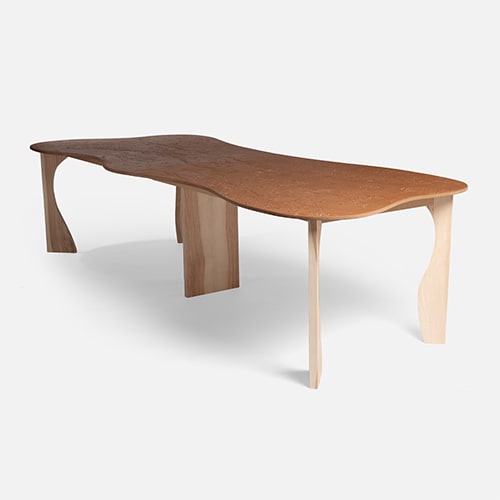
Lilly Ellen Dormeier is a spatial designer educated in the Master’s programme in Spatial Design at Konstfack. Her practice explores how design can contribute to more meaningful forms of coexistence between people, communities, and the wider ecological systems they are part of. Working from a deeply human-centred perspective, she investigates how spaces can support connection, participation, and a higher quality of life.
Central to her work are themes of social sustainability, interdependence, and the relationship between humans, animals, plants, and their shared environments. Rather than approaching design as the creation of objects alone, Lilly sees it as a way of responding to contemporary social and ecological challenges and exploring how design can contribute to positive change.
Materials are an integral part of her practice and are carefully selected for their ability to communicate ideas and values. She views materials as carriers of stories and treats them as valuable resources, placing strong emphasis on conscious sourcing, reuse, and responsible use. Wood is a particular focus in her work, valued for its individuality, natural character, and ability to create meaningful connections between people and material.
Her process is driven by observation, dialogue, and reflection. Projects often begin with questions about how people live together and evolve through research, experimentation, and making. Rather than pursuing predetermined outcomes, she allows concepts to develop through an open and adaptive design process informed by new insights and conversations.
Functionality is important in Lilly’s work, but she understands it in both practical and social terms. Beyond serving a purpose, design should contribute to better forms of living together. Craftsmanship also plays a significant role, allowing her to work closely with materials and translate ideas into thoughtful spatial experiences.
What characterizes Lilly’s practice is a willingness to engage with complexity rather than simplify it. Through a process-oriented and reflective approach, she creates projects that encourage dialogue and explore how design can foster stronger relationships between people, places, and the natural world.