Jacques Schiessl is a German furniture designer and systems-oriented practitioner with a Bachelor's degree from HDK-Valand Campus Steneby. During his studies, he completed several notable projects, including the award-winning Play Table, recipient of the Olga Birkfeldt Art Prize, a collaborative project with Swedish furniture manufacturer Stolab, and the construction of a pavilion for the Venice Architecture Biennale 2025. He further expanded his professional experience through an internship at the Lisbon-based design studio THIS is UTIL, where he developed a growing interest in material-driven and production-focused design processes.
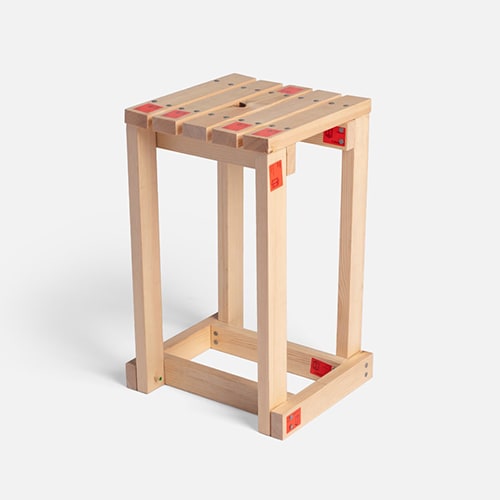
At the core of Schiessl's practice is the belief that furniture can function as a catalyst for social interaction, learning, and emotional attachment. Rather than designing finished products, he often develops systems that allow users to become active participants in the design process. One example is his digital stool configurator, which enables users to create their own designs within a structured framework. Participants then assemble their furniture during collective workshop events, embedding personal experiences and social memories into the final object.
His work is driven by a desire to democratize design and empower individuals through making. Inspired by Enzo Mari's Autoprogettazione, Schiessl frequently works with everyday materials such as standard pine profiles and readily available hardware-store components. These choices deliberately lower the threshold for participation, making furniture construction accessible to people without professional craft training. For Schiessl, design is not only about physical objects but also about creating opportunities for users to gain practical skills, confidence, and a stronger sense of agency.
While environmental sustainability plays a role in his work, Schiessl is particularly interested in cultural sustainability and emotional durability. He challenges contemporary patterns of rapid consumption by encouraging deeper relationships between people and the things they own. By involving users in both the design and assembly process, he seeks to create furniture that is valued, maintained, and kept for longer periods of time.
Material exploration remains an important aspect of his practice. Although much of his work has been developed in wood, his experience at THIS is UTIL introduced him to sheet metal as a material with unique possibilities and constraints. He embraces the specific characteristics of each material, allowing its inherent properties to guide construction methods and formal decisions rather than forcing it into predetermined solutions.
Schiessl's design process is highly iterative and research-driven. Concepts often emerge from observations of societal needs and critical reflections on consumer culture. Maintaining flexibility and critical distance throughout a project allows him to reassess assumptions and continuously refine his approach. Functionality and the experience of use remain central considerations, while the final aesthetic often emerges through the active contribution of the user rather than the pursuit of a polished industrial finish.
What distinguishes Schiessl's work is his position between designer, facilitator, and systems thinker. By connecting digital tools, physical making, and collective participation, he creates design processes that extend beyond the object itself, transforming furniture into a platform for engagement, learning, and shared experience.