Abhishek Muthurajan is a graduate of the Master’s program in Child Culture Design at HDK-Valand, where his work explored the intersection of design, food, and children’s participation.
His work is rooted in the belief that everyday environments—particularly kitchens—hold the potential to become spaces of empowerment, negotiation, and learning for children.
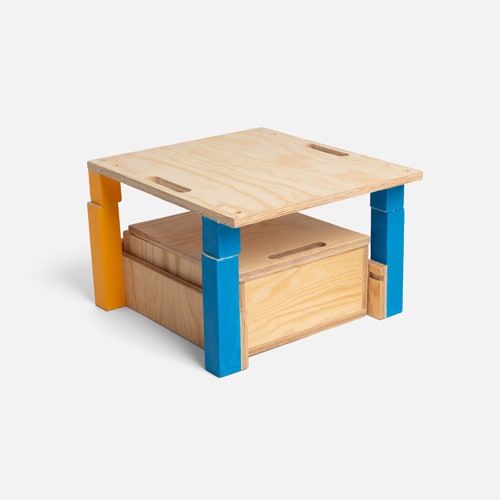
His thesis project examines how participatory design and speculative approaches can reimagine the domestic kitchen. His work-in-progress object, Barn Kitchen Step Stool, proposes a hybrid tool-furniture piece that integrates into the kitchen system, replacing conventional cabinetry. By doing so, it aims to give children a dedicated place and agency within the kitchen, supporting food literacy, and fostering social confidence.
Abhishek has engaged in collaborative and community-oriented projects, notably working with Göteborgs Konsthall on an edible art workshop for families as part of Jul i Gamlestaden. His broader practice is inspired by food design, storytelling, and co-creation with children. This interest is reflected in his published picture book on food, created in collaboration with a child author, emphasizing the value of shared authorship and young perspectives.
Material exploration plays a central role in his design process. He has developed a strong affinity for working with wood, appreciating its tactile qualities and its potential to support children’s voices and interaction. His work also demonstrates a commitment to sustainability and experimentation, including projects using sugarcane waste to produce drinking straws and ground coffee as a medium for creating mugs.
Abhishek approaches concept development through hands-on making, often building scale prototypes using his final materials. This method allows him to understand material properties deeply and uncover new design possibilities organically. While functionality is central to his work, he carefully balances it with creativity and aesthetics, ensuring that his designs are not only practical but also engaging and meaningful.
Through his practice, Abhishek seeks to challenge conventional design norms and create inclusive, participatory environments where children can actively shape their experiences and relationships with everyday spaces.